What does Joseph mean, origin of the name & popularity
What does Joseph mean? The name Joseph means “He will add” or “Jehovah increases,” derived from the Hebrew verb yasaf (to add). This timeless name carries profound spiritual significance, revered in the Bible as the husband of the Virgin Mary and in the Quran as the Prophet Yusuf. In this comprehensive guide, we explore Joseph’s Hebrew origins, its historical popularity across centuries, and its cultural impact to help you choose the perfect name for your newborn.
What Does the Name Joseph Mean?
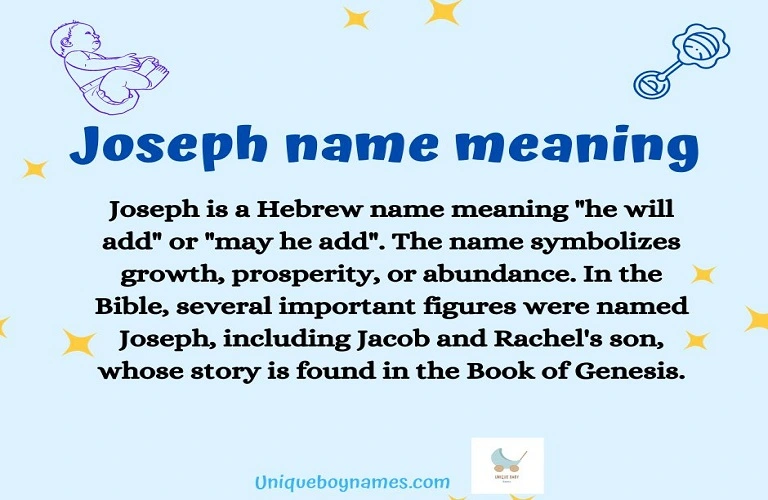
Joseph means “he will add” or “God will increase,” conveying a beautiful message of divine blessing and growth. The name speaks to the hope parents hold for their child’s future—that their life will bring abundance and their presence will enrich the lives of others. This meaning resonates deeply with families who value faith and the promise of better things to come. The imagery of increase suggests not material wealth alone, but spiritual richness, wisdom, and meaningful contributions to the world.

What Is the Origin of the Name Joseph?
Joseph originated in ancient Israel as the Hebrew name Yosef, belonging to one of the twelve sons of Jacob and becoming a tribal patriarch’s name. The name traveled from Hebrew scriptures through Greek translations of the Septuagint, into Latin via the Vulgate Bible, and finally entered English through Norman French after the Christianization of Europe. This three-thousand-year journey carried the name across continents and cultures, embedding it deeply in Western naming traditions.
Linguistic Roots
The Hebrew roots trace back to “yasaf,” meaning to add or increase. The Hebrew verb “yasaf” (יָסַף) forms the foundation of this enduring name, appearing throughout the Hebrew Bible to denote addition, continuation, and divine increase in blessings and descendants.
How Joseph Evolved
Joseph transformed from biblical figure to globally recognized name across centuries. The name evolved from ancient Hebrew “Yosef” through Greek “Iōsēph” and Latin “Iosephus” to medieval European variants, eventually becoming the standardized “Joseph” in English by the 16th century.
Trace the evolution across languages and centuries
Click each language to explore how the name transformed through history
Click on each era to discover key historical milestones
The name Joseph first appears in Hebrew scripture as Yosef, belonging to the son of Jacob and Rachel. This biblical patriarch’s story of betrayal, rise to power in Egypt, and ultimate forgiveness became one of the most recognized narratives in religious history.
During this period, the name spread through Jewish communities and entered Greek translation via the Septuagint, marking its first major linguistic transformation.
With the Christianization of Europe, Joseph gained prominence through Saint Joseph, the husband of Mary and earthly father of Jesus. This association elevated the name’s status throughout Catholic Europe.
The name appeared in various forms across European languages: Giuseppe in Italy, José in Spain, Josef in Germany, and Josep in France, demonstrating its widespread adoption.
European colonization and migration carried Joseph across the Atlantic to the Americas. The name became established in colonial records and was among the most common male names in early American settlements.
Immigration waves from Ireland, Italy, and Eastern Europe in the 19th century further solidified Joseph’s presence in American naming traditions.
Joseph has maintained remarkable consistency, remaining in the top 30 American names for over 140 years. The name peaked at #5 in 1989 and currently ranks #26 according to the Social Security Administration (2023).
Today, Joseph enjoys global recognition with variations used across cultures, from Youssef in Arabic-speaking countries to José in Latin America, testament to its enduring cross-cultural appeal.
Is Joseph a Boy or Girl Name?
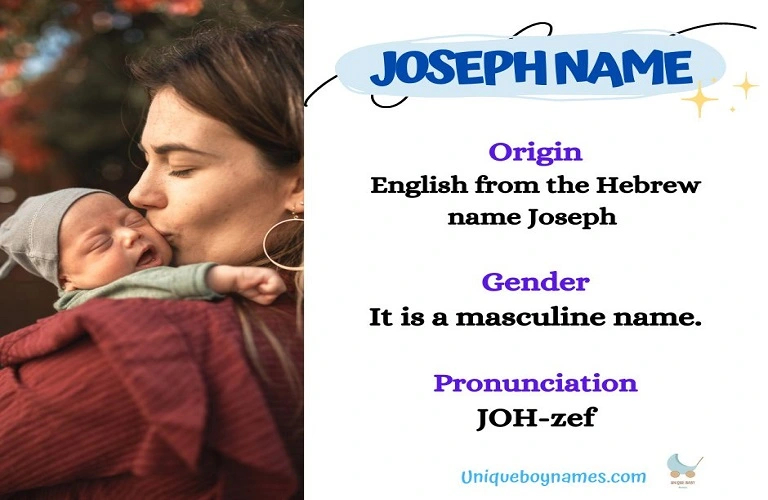
Joseph is exclusively a boy’s name in standard usage. While names like Jordan or Taylor have evolved into unisex options, Joseph has maintained its identity as a distinctly masculine name throughout history.
Predominantly masculine since biblical times
What Does Joseph Mean Across Religions?
Joseph holds profound spiritual significance across the world’s major monotheistic religions. The shared reverence for Joseph across religious traditions makes this name uniquely suited for interfaith families or those who value broad spiritual heritage.
Islam
In Islamic tradition, Prophet Yusuf exemplifies patience, virtue, and divine guidance.
The name Joseph corresponds to the Prophet Yusuf (عليه السلام), featured in Surah Yusuf (Quran 12), known as the most beautiful story in the Quran. Muslim families widely use this name with full religious approval, as the prophet’s life exemplifies patience, forgiveness, and trust in Allah’s plan.
Christianity
Christianity honors Joseph as Jesus’ earthly father and the Old Testament patriarch.
Two major biblical figures bear this name: Joseph the patriarch of Genesis, whose coat of many colors symbolizes divine favor, and Saint Joseph, the husband of Mary and earthly father of Jesus, revered as the patron saint of workers and families worldwide.
Judaism
Jewish tradition celebrates Joseph as a tribal patriarch and model of righteousness.
In the Torah, Joseph represents one of the twelve tribes of Israel, the son of Jacob and Rachel. His story in Genesis demonstrates themes of divine providence, family reconciliation, and leadership during adversity.
Joseph’s meaning across three major world religions
Islam
Surah Yusuf is known as the most beautiful story in the Quran, detailing Prophet Yusuf’s journey from betrayal to leadership in Egypt. The name represents patience, forgiveness, and divine providence.
Fully permissible and encouraged in Islamic tradition. The Arabic form Yusuf maintains the exact meaning “he will add” and connects directly to a revered prophet.
Widely used across Muslim-majority countries. Particularly popular in the Middle East, North Africa, South Asia, and among Muslim communities worldwide.
Christianity
Two major biblical figures: Joseph the Old Testament patriarch (coat of many colors) and Saint Joseph, the husband of Mary and earthly father of Jesus Christ in the New Testament.
Patron saint of workers, fathers, and families. Saint Joseph’s Day (March 19) is celebrated worldwide. Pope Pius IX declared him patron of the Universal Church in 1870.
Extremely popular throughout Christian history. Common in Catholic, Orthodox, and Protestant traditions. Variants include Giuseppe (Italian), José (Spanish), Josef (German).
Judaism
Joseph is the son of Jacob and Rachel, one of the twelve tribal patriarchs. His story in Genesis 37-50 is one of the longest narratives in the Torah, emphasizing divine providence.
Joseph fathered two tribes: Ephraim and Manasseh. The tribe of Joseph received a double portion of inheritance, reflecting his status as Jacob’s beloved son.
Continuously used in Jewish communities for over 3,000 years. Common in both Ashkenazi and Sephardic traditions. Yosef remains one of the most popular Hebrew names today.

How Popular Is the Name Joseph?
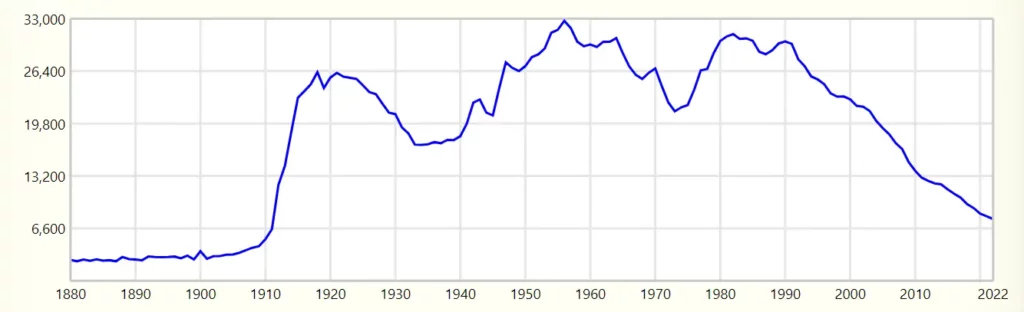
Joseph currently ranks #26 in the United States, with 8,128 baby boys receiving this name in 2023 according to the Social Security Administration. This ranking represents a gradual decline from its peak position of #5 in 1989, yet Joseph has never fallen out of the top 30 names in over a century of recorded American naming statistics. Such remarkable consistency demonstrates the name’s enduring appeal across generations of American families.
US History
Joseph has maintained top-30 status for over 140 years of American records.
From its debut at #7 in 1880 (the first year of SSA records) through the present day, Joseph has demonstrated extraordinary staying power, briefly reaching #5 in 1989 and consistently remaining in the top 30 names nationwide.
Global
Joseph enjoys widespread popularity across English-speaking and European nations.
Joseph ranks in the top 20 in Ireland and the United Kingdom, holds #3 in Israel (as Yosef), and appears frequently throughout Europe in various linguistic forms including Giuseppe (Italy), José (Spain), and Josef (Germany).
US rankings and global statistics
Joseph’s gradual decline means your son will have a recognizable classic name without being one of five Josephs in his classroom. The name remains familiar enough to be easily pronounced and spelled, yet distinctive enough to stand apart from trendier options.
Click on a country to see detailed popularity statistics
Ireland
Top 20 NameUnited Kingdom
Top 20 NameIsrael
Rank #3 (Yosef)The Unique Value of the Name Joseph
What sets Joseph apart from virtually every other name in existence is its rare distinction of featuring prominently in the foundational texts of three world religions. No other name can claim such universal spiritual recognition while maintaining consistent popularity across cultures, languages, and centuries.
Key Facts
These four facts highlight Joseph’s unique historical and cultural significance.
Joseph’s remarkable journey spans biblical patriarch status, New Testament sainthood, presidential recognition, and continued global popularity—few names can claim such diverse and enduring historical significance.
Discover what makes this name truly special
Ancient Roots
Joseph traces back over 3,000 years to Hebrew scripture, making it one of the oldest continuously used names in human history.
Joseph traces back over 3,000 years to Hebrew scripture, making it one of the oldest continuously used names in human history. This remarkable longevity speaks to its timeless appeal and deep cultural significance across civilizations and generations.
Biblical Legacy
Two pivotal biblical figures bear this name: the Old Testament patriarch and the New Testament’s Saint Joseph, father of Jesus.
Two pivotal biblical figures bear this name: the Old Testament patriarch (son of Jacob, sold into slavery by his brothers) and the New Testament’s Saint Joseph, the earthly father of Jesus Christ. This dual significance gives the name unmatched spiritual depth across Christian traditions.
Presidential Name
The name has been borne by a U.S. President (Joe Biden), demonstrating its continued relevance in modern American leadership.
The name has been borne by a U.S. President (Joe Biden, 46th President of the United States), demonstrating its continued relevance in modern American leadership. This contemporary association adds prestige to the name’s already impressive historical weight.
Global Recognition
Joseph exists in virtually every European language with recognizable forms, making it truly international in scope and appeal.
Joseph exists in virtually every European language with recognizable forms: Giuseppe (Italian), José (Spanish), Josef (German), Józef (Polish), Joséph (French). This international presence makes the name truly global in scope and appeal.
Expert Rating
Joseph scores highly for heritage and sound quality across expert evaluations.
Nameberry users rate Joseph 8.5/10 overall, with exceptional scores in Sound (9/10) and Cultural Heritage (10/10), reflecting its phonetic clarity and deep historical roots.
Personality & Vibe
Joseph conveys reliability, tradition, and quiet strength in cultural perception.
Names evoke associations, and Joseph typically suggests someone dependable, principled, and grounded—though individual personality ultimately depends on the person, not the name.
Cultural perceptions associated with the name Joseph
Strongly associated with tradition, heritage, and established values.
Perceived as reliable, trustworthy, and consistent in all situations.
Connected to faith, morality, and deeper biblical meaning.
Someone perceived as reliable is seen as dependable, consistent, and trustworthy. They keep their word and follow through on commitments.
A grounded person is practical, sensible, and well-balanced. They remain calm under pressure and stay connected to reality.
Being principled means having strong moral values and acting with integrity. Decisions are based on beliefs rather than convenience.
Cultural perception analysis — not scientific research. Individual personality is shaped by many factors beyond a name.
Pros and Cons
Consider both strengths and considerations when evaluating Joseph for your child.
Every name carries trade-offs: Joseph offers proven reliability and rich heritage but may feel common to those seeking uniqueness—weighing both sides helps parents make informed decisions.
A balanced assessment for informed decision-making
Strengths
4 points3,000+ years of documented history across multiple cultures and religions. This remarkable depth provides your child with a name that carries genuine meaning and significance beyond passing trends or fashion.
Universally recognized and correctly pronounced in most languages worldwide. Your child will never struggle with mispronunciations or need to repeat their name, whether at home or traveling abroad.
No spelling confusion—six letters, straightforward, no variants to explain. The name is instantly recognizable in writing, avoiding the common frustration of spelling out unusual names.
Transitions seamlessly from childhood to professional settings. Joseph suits a CEO as well as it suits a toddler, aging gracefully throughout all life stages without seeming juvenile or outdated.
Considerations
4 pointsMay share the name with classmates; less distinctive in crowded settings. Your child might be “Joseph M.” rather than the only Joseph in their class, though this is becoming less common as popularity declines.
Biblical and presidential connections may precede the individual. Some people may have preconceived notions or expectations based on famous Josephs throughout history and in current events.
“Joe” is nearly automatic—consider if you prefer the full name. Be prepared for teachers, coaches, and friends to naturally shorten Joseph to Joe without asking your child’s preference.
Has dropped from #5 (1989) to #26 (2023); some may view as a “dad name.” While this actually means the name is less common for children now, some perceive classic names as dated rather than timeless.
Our Verdict
Joseph earns our strong recommendation for parents seeking a name with proven longevity, cross-cultural recognition, and deep spiritual roots. While not unique, its reliability, ease of use, and rich heritage make it a solid foundation for any child’s identity.
Is Joseph a Good Baby Name in 2025?
YES, Joseph remains an excellent choice for babies born in 2025.
Expert analysis for modern parents
Joseph Name Character and Life Path
The following analysis reflects cultural naming associations and perceived character traits—not scientific research or prediction of individual personality. Names carry cultural weight and historical associations that subtly influence how others perceive individuals, though each person ultimately defines their own character through choices and actions.
Character & Life Path
Cultural perceptions associated with Joseph
Emotional Spectrum
Calm under pressure, provides stability for others during challenging times.
Personal Integrity
Trustworthiness and moral consistency—someone who keeps their word and honors commitments.
Relationships
Values long-term connections and approaches relationships with patience and dedication.
Career & Life
Favors careers in leadership, education, public service, and fields requiring trust.
Cultural perception analysis—not scientific research or personality prediction
Name Pairings for Joseph
Joseph pairs beautifully with names that complement its classic two-syllable structure. The name ends with a soft “f” sound, creating opportunities for middle names that begin with crisp consonants for contrast or vowels for smooth flow. Whether considering nicknames, middle names, siblings, or similar alternatives, Joseph offers versatility while maintaining its dignified character.
popular Nicknames for Joseph
Joseph offers familiar nickname options that grow naturally from the full name.
The most common nicknames include Joe, Joey, and Jojo—each carrying its own vibe from professional to playful.
Nicknames for Joseph
The most common and widely recognized nickname for Joseph. Works perfectly in professional settings and transitions seamlessly into adulthood. Most Josephs naturally adopt this form in their teen and adult years.
A friendly, approachable nickname often used during childhood and early teen years. Many Josephs eventually transition from Joey to Joe as they enter adulthood, though some keep it throughout life.
A playful, affectionate nickname typically used within close family circles. More common in childhood, it can carry into adulthood as a family pet name or among very close friends.
Though sometimes considered feminine, Josie can be used affectionately for male Josephs in certain families or regions. Less common but adds a unique, personal touch to the name.
A less common nickname that some Josephs adopt. More frequently used in certain regions of the United States. Offers a softer, more casual alternative to the traditional Joe.
Tip: “Joe” works well for professional adults, while “Joey” suits childhood years. Many Josephs transition between nicknames naturally throughout life.
Middle Names
Middle names for Joseph should balance rhythm and complement the name’s classic tone.
One-syllable middle names create punchy impact, while two-syllable options offer flowing elegance with the first name Joseph.
Middle Names for Joseph
Names to Avoid
Joseph Jonas (repetitive J sounds), Joseph Geoff (confusing phonetics), Joseph Seth (soft endings clash)
Sibling Names
Sibling names should share Joseph’s timeless quality and biblical or classic roots.
Names like Benjamin, Samuel, and Daniel for brothers; Elizabeth, Sarah, and Hannah for sisters complement Joseph’s traditional character.
Sibling Names for Joseph
Both names share Hebrew origins and biblical significance. Benjamin and Joseph were actually brothers in the Old Testament, making this pairing historically meaningful.
Samuel matches Joseph’s Hebrew roots and classic styling. Both names have remained consistently popular and age gracefully from childhood to adulthood.
Daniel shares Joseph’s biblical heritage and timeless appeal. Both names are internationally recognized and work well across cultures and languages.
David brings royal biblical heritage to match Joseph’s patriarchal significance. The names sound harmonious together and share similar traditional values.
Jacob was Joseph’s father in the Bible, creating a meaningful family connection. The names share Hebrew origins and complement each other beautifully.
Elizabeth matches Joseph’s timeless quality and biblical roots. Both names have Hebrew origins and carry centuries of tradition and dignity.
Sarah shares Joseph’s Hebrew heritage and classic simplicity. The names sound harmonious together and work well as a sibling set.
Hannah brings grace and Hebrew tradition that complements Joseph perfectly. Both names have gentle sounds and timeless appeal.
Rachel was Joseph’s mother in the Bible, creating a beautiful family story. The names share deep biblical significance and Hebrew origins.
Anna offers classic simplicity that pairs beautifully with Joseph. Both names are internationally recognized and have remained popular across generations.
Similar Names
Similar names share Joseph’s biblical heritage, Hebrew origins, or classic structure.
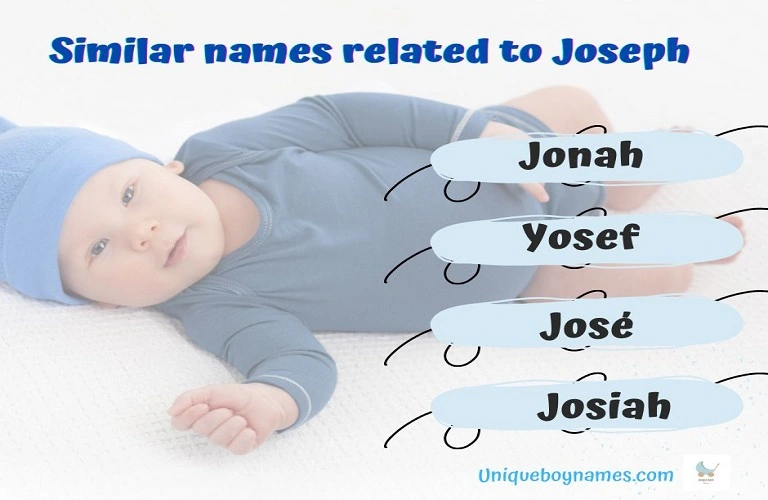
Alternatives include Joshua, Jonathan, Jacob, and James—names with comparable longevity and cross-cultural recognition.
Similar Names to Joseph
Famous People Named Joseph
The name Joseph has been borne by presidents, revolutionaries, artists, and scientists throughout history. This remarkable range demonstrates how the name transcends political, cultural, and professional boundaries.
Joseph Biden
Joseph Biden serves as the 46th President of the United States of America.
Joseph Stalin
Joseph Stalin led the Soviet Union through World War II as dictator.
Joseph Gordon-Levitt
Joseph Gordon-Levitt is an acclaimed American actor and filmmaker.
Joseph Fourier
Joseph Fourier revolutionized mathematics with his heat equation theory.
Famous People Named Joseph
Notable figures who shaped history, politics, arts & science
Joseph Robinette Biden Jr. became the 46th President of the United States in 2021 after decades of public service as Senator and Vice President.
Biden’s presidency brings Joseph into contemporary leadership, proving the name remains relevant for modern statesmen.
Joseph Vissarionovich Stalin ruled the Soviet Union from the mid-1920s until 1953, leading the nation through World War II as a key Allied power.
Stalin demonstrates the name’s presence in defining 20th-century world events, for better or worse.
Born in 1981, Gordon-Levitt evolved from child actor to respected performer known for “Inception,” “500 Days of Summer,” and his creative platform HITRECORD.
Gordon-Levitt shows Joseph suits modern creative professionals, not just historical figures.
Jean-Baptiste Joseph Fourier pioneered the Fourier series and heat equation—mathematical foundations essential to modern engineering, physics, and signal processing.
Fourier represents intellectual achievement, showing Joseph has been borne by minds that advanced human knowledge.
Parents Who Like Joseph Also Like
Parents drawn to Joseph typically appreciate names with similar qualities: biblical heritage, Hebrew origins, classic structures, and proven longevity. The following names share these characteristics while offering slightly different sounds, meanings, or popularity levels for families exploring their options.
Parents Also Like
Names with similar style & appeal to Joseph

Joseph name meaning & origin video
Final Thoughts on the Name Joseph
Joseph stands as one of the most reliable, meaningful, and universally recognized names in human history. Its rare distinction of featuring prominently in three world religions—Christianity, Judaism, and Islam—grants it a spiritual depth few names can match. The name’s consistent presence in the top 30 American names for over 140 years speaks to its enduring appeal across changing cultural landscapes.
For parents seeking a name that balances tradition with accessibility, heritage with modern relevance, Joseph delivers on every front. Whether you’re drawn to its biblical significance, its presidential legacy, or simply its pleasant sound and straightforward spelling, Joseph offers a foundation of identity that will serve your child well from infancy through adulthood. This is a name that has stood the test of time and continues to stand tall.
“Joseph carries three thousand years of history, yet feels perfectly at home in a modern classroom.”
Frequently Asked Questions About Joseph
Frequently Asked Questions
Everything you need to know about the name Joseph
Joseph means “he will add” or “Jehovah increases,” expressing divine blessing. The Hebrew name Yosef literally translates to “he will add,” reflecting the hope that God will increase the family with additional blessings and children.
Joseph ranks #26 in the United States with 8,128 births recorded in 2023. The name has remained in the top 30 American names for over 140 years, demonstrating extraordinary consistency in popularity across generations.
Yes, Joseph appears prominently in both Old and New Testaments of the Bible. The Old Testament features Joseph the son of Jacob; the New Testament features Joseph the husband of Mary and earthly father of Jesus Christ.
Yes, Joseph corresponds to the Prophet Yusuf, a revered figure in Islam. The name Yusuf appears in the Quran’s 12th chapter (Surah Yusuf), and Muslim families widely use this name with full religious approval.
Common nicknames include Joe, Joey, Jojo, and occasionally Josie or Jody. Joe serves as the standard adult nickname, while Joey is common during childhood years, with many Josephs transitioning between forms throughout life.
No, Joseph is exclusively a male name with Josephine as the female form. Over 99% of babies named Joseph are male, and parents seeking a feminine version traditionally use Josephine or its variants.
Joseph is pronounced JO-səf with emphasis on the first syllable. The phonetic transcription shows two syllables with the stress on “JO” and a soft “f” ending, consistent across English-speaking countries.
Sources & References
Based on official, governmental, and educational documents
Used for: US popularity rankings, birth statistics, historical data (1880-2023)
ssa.gov/OACT/babynames/Used for: Name origin, linguistic evolution, Hebrew roots
etymonline.com/word/JosephUsed for: Jewish history, tribal patriarch information, Hebrew name forms
jewishencyclopedia.com/articles/8702-josephUsed for: Biblical meaning, Christian significance, scriptural references
biblestudytools.com/dictionary/joseph/